
Michelle Cameron, a long-time Getaway
participant, talks about the book deal she got after attending our
"Finishing Your Novel" workshop.

BY LISA KINTISH
Reprinted from Parsippany Life, August 06, 2008
 |
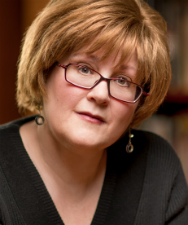
Michelle Cameron (pictured right) has accomplished what some can only dream of
doing; she has published a book with a major publishing house,
Pocket Books, an imprint of Simon & Schuster. Slated for release
next fall, “Shira of Ashkenaz” is set in Europe during the
Middle Ages and tells of the lives of a Jewish family through
the eyes of Shira, the wife of one of Europe's most prestigious
rabbis. Even more interesting, it is based on Cameron's ancestor
from the 13th-century, Rabbi Meir ben Baruch of Rothenberg.
This not the first foray into the publishing world for Cameron,
an employee with the Parsippany-based Interactive Media
Associates. Her previous book, “In the Shadow of the Globe,” is
set during the time of William Shakespeare. Parsippany Life
interviewed Cameron to learn more about her experiences writing
and publishing.
PL: What is your writing process like and how do you manage to
do it along with family and work?
MC: I'm fortunate that I'm able to tune out so much of the world
around me when I write. I remember the days when I used to take
a laptop along while my son took karate lessons. But it's
difficult to find time when you're raising a family and working
40-plus hours a week.
Then, as I was struggling to find time to complete the first
draft of this novel, something amazing happened. I attended the
2006 Poetry & Prose Getaway in Cape May,
taking a workshop
called "Finishing Your Novel." The workshop leader, young adult
novelist Carol Plum-Ucci, challenged all of us: "what's stopping
you?" My answer was time, and I enumerated everything I was
juggling - two sons in high school, one about to embark on his
college search, a full-time job, a part-time teaching position…
by the time I was finished, my fellow writers agreed that there
was no solution.
But Carol refused to accept that. She looked at me and asked:
"How early can you get up?"
I went home and set my alarm clock for 4:30 AM. It was hard at
first - but got easier as I discovered this spectacular little
slice of silent time. No phones ringing, no one yelling or
asking me to find something. It was heaven - and my novel just
flew.
PL: Tell me a little about your job.
MC: I've been at Interactive Media Associates, headquartered in
Parsippany, for nearly nine years. I'm fortunate to work in a
place where I can expend as much creativity as I do writing the
novels. As Creative Director, I work on nearly all of our
projects. On any given day, I might be involved in a new
ecommerce application for New York City Ballet, a career Web
site for C.R. Bard, or a site filled with interactive games and
social networking, encouraging teens to eat right and get more
exercise for the Goreyb Children's Hospital. We serve a wide
array of corporate and non-profit clients, providing strategic
consulting, interactive marketing, design and development, and
support in the interactive realm.
PL: Your novels are historical, how much research did you have
to do prior to writing?
MC: I approached researching these two books very differently.
The first one, about Shakespeare, was researched more than 20
years ago, before the advent of the Internet. I spent two years
in libraries, going to museums, and even took a trip to England.
Only after that did I sit down and write - not the book that
eventually got published - but a young adult novel that never
went anywhere.
I had just had my first baby when I ran into obstacles finding
an agent or publisher, so I shelved that book and my writing.
When my children were older, I began to write poetry because the
shorter form meant I could start and finish a complete work in a
couple of days. On a whim, I wrote a few poems about Shakespeare
at the Globe. Because I knew the history and the characters so
well, poems just flowed out of me and started telling their own
story. Depending on how you look at it, “In the Shadow of the
Globe,” published by Lit Pot Press in 2003, took me either 25
years or two years start to finish.
With “Shira of Ashkenaz,” I needed a different approach. Rather
than investing years in intense research, I spent about 2-3
months familiarizing myself with the period, creating a basic
timeline, and figuring out where I could go for answers when I
needed them. Then I started writing. I had to chase down
specific facts mid-passage, but the fact that the Internet had
been invented by this time helped tremendously. For instance, it
took me 15 minutes to track down what you'd serve in a
13th-century Jewish wedding feast, rather than the two weeks of
library excavation it might have taken before.
PL: Were you a history major?
MC: English lit major, history minor. I actually wanted to take
a double major. But the Latin requirement at my college to
qualify for a degree in history defeated me.
PL: How did you get an agent and a publisher? How does someone
break into the world of publishing when it seems a good idea is
not enough?
MC: Finding the right agent was key for me. To get an agent to
read your work, one of the most important factors is finding
best-selling books that are similar to your own - and then
describing clearly how your book is different. Because the
emphasis is on the bottom line in publishing these days,
publishers seem to take fewer risks than in the past. So you
have to prove that your book is marketable by identifying other
books in your genre that have succeeded, while still showing
your work is unique enough to stand out from the pack.
For me, the best models were the successful Rashi's Daughters
trilogy by Maggie Anton and The Red Tent, a bestseller by Anita
Diamant. Because I described how these books were successfully
marketed in my agency query letter, several agents were curious
to take a look.
But it still took time. It wasn't until my second agency mailing
- I probably contacted about 12 agents in total - that I finally
found the right one. There were a number of polite "no thank
you's," a number of "almosts" and some agents that didn't even
bother to respond. To find my list of agents, I consulted
directories, but even more importantly, I browsed my own
bookshelves, the libraries, and bookstores for novels in my
genre. I checked if the author included an acknowledgement, or I
did a Google search for that author + agent.
Once I had secured representation, I followed my agent's
suggestions to help the marketability of the novel. Then she
began talking to publishers. I was both thrilled and anxious,
having heard tales of woe from several writer friends. They had
written wonderful novels, but their agents simply couldn't
manage to make the sale. You're absolutely right, these days
sometimes a good idea - or a good book - just isn't enough. Your
manuscript has to land on the right editor's desk on the right
day.
My agent sent the book to some 16 publishers and I collected a
lot of rejections - most very flattering, several amusingly
contradictory. The offer came just before the Fourth of July. I
mailed my first agent queries right after Labor Day, so the
entire process took nine months.
“Shira of Ashkenaz” - still a working title - will be published
by Pocket Books in the fall of 2009. I'm eager to experience the
entire process with a major publisher. “In The Shadow of the
Globe” was published by a wonderful small literary house, but
Lit Pot Press would be the first to admit it didn't have the
marketing or distribution clout of a Simon & Schuster.
Anyone who would like to follow Cameron through her continued
adventures in publishing, can subscribe to her mailing list at
www.michelle-cameron.com.
Register
today & create your own success story!
|
Do you have a Getaway success story you'd like to
share? If the Getaway helped you create your own success story, send an email (and a link if appropriate) to
info@wintergetaway.com
to tell us about it. We plan feature selected stories here and in
our newsletters.
|
|